Data Analytics in Civil Engineering
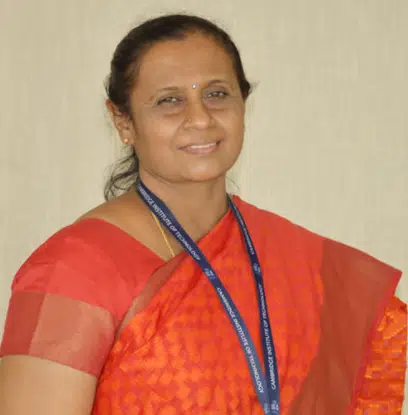
Dr. M.A.Jayaram
Expert from RASTA-Center for Road Technology, Bengaluru

- Implement the CRISP-DM process for data analysis.
- Examine data quality and visualize two-dimensional and multidimensional datasets.
- Develop data models using appropriate modelling techniques.
- Organize and prepare data for effective modelling.
- Execute data analytics on transportation and highway datasets using R.
| Day No. | Topics Covered |
|---|---|
| Day 1 |
• Introduction to data analytics and its role in civil engineering practice • Engineering data types, measurement scales, and major data sources • SEMMA and CRISP-DM methodologies with dataset selection and planning |
| Day 2 |
• Descriptive statistical measures using engineering datasets in R Studio • Frequency tables, histograms, and interpretation of data characteristics • Inferential statistics, hypothesis testing, and probability distributions |
| Day 3 |
• One- and two-dimensional visualization techniques for trend and outlier identification • Multidimensional visualization methods including PCA, radar charts, and MDS • Correlation analysis using Pearson and Spearman methods in R Studio |
| Day 4 |
• Identification and correction of missing, inconsistent, and duplicate data • Data pre-processing techniques including normalization and standardization • Feature selection and data cleaning using R Studio |
| Day 5 |
• Handling complex data formats including time-series and spatial datasets • Integration of multiple data sources for analysis • Feature construction and dataset transformation for modelling |
| Day 6 |
• Basics of analytical modelling and model evaluation • Hands-on linear regression in R Studio • Analysis of error metrics and data quality impact |
| Day 7 |
• Built and validated uni- and bivariate regression models • Explored polynomial and non-linear regression • Applied models to pavement and runoff prediction |
| Day 8 |
• Covered similarity metrics for clustering • Applied K-Means, K-Medoids, and Hierarchical methods in R |
| Day 9 |
• Demonstrated pattern recognition in civil engineering data • Reviewed Modules 1–5 and supported CRISP-DM report completion |
| Day 10 | • Final assessment |
Subject Matter Expert
Dr. M. A. Jayaram is a distinguished academician with over 40 years of teaching and 20 years of research experience spanning civil engineering and computer science. He holds a Ph.D. from Visvesvaraya Technological University for his interdisciplinary work on soft computing techniques in concrete technology. A prolific scholar, he has authored 17 textbooks and published more than 150 papers in reputed national and international journals. With extensive contributions as a research guide, BOS member, journal reviewer, and editor, Dr. Jayaram has significantly influenced engineering education and research. Currently serving as Senior Professor at RASTA–Center for Road Technology, VTU Extension Center, Bangalore, he is recognized for his pioneering efforts in integrating artificial intelligence, machine learning, and computational modeling into civil engineering applications.